Revolutionizing Real Estate: The End of 6% Commissions Following NAR's Historic Settlement
For decades, the cost of buying or selling a home was significantly shaped by a traditional commission structure, where a standard 6 percent fee was often expected as compensation for real estate agents. This longstanding practice, deeply rooted within the industry, played a pivotal role in shaping the livelihoods of countless agents across the country. The National Association of Realtors (NAR), the industry's largest trade association, has been influential in maintaining these commission benchmarks, ensuring that its members could rely on these established rates.
However, the landscape of real estate transactions is poised for a transformative change. A recent settlement has brought about a seismic shift that redefines the economics of home transactions. This settlement presents a groundbreaking evolution from the age-old commission model, challenging the NAR's influence and potentially reshaping how agents negotiate their fees. In this article, we will delve into the details of this landmark agreement and explore its far-reaching implications for realtors and homeowners alike.
Understanding Real Estate Commissions Before the Settlement
The concept of the real estate commission has been integral to the housing market for decades. Traditionally, a standard 6 percent commission has been the norm for transactions, a fee typically paid by the seller to be split between the seller's and buyer's real estate agents. This longstanding tradition has shaped not only the cost structure of selling and purchasing a home but also the professional dynamics within the real estate industry.
Overview of the Customary 6 Percent Commission
The ubiquitous 6 percent commission has been seen by many as a benchmark for real estate transactions. This fee is commonly divided equally between the seller's agent and the buyer's agent, thereby incentivizing both parties to cooperate towards a successful sale. This cost has been considered by some as a necessary investment into the expertise and services that real estate professionals bring to the table.
Roles of Seller's and Buyer's Agents in the Commission Model
Under the traditional model, the seller's agent, also known as the listing agent, is responsible for marketing the property, hosting viewings, and negotiating on behalf of the seller. Conversely, the buyer's agent focuses on assisting their client in finding the right property, negotiating purchase terms, and guiding them through the complexities of the home buying process. Despite seeming to serve opposite sides, both agents' efforts are directly aligned with their clients' interests and are financially rewarded through the commission structure.
How Realtor Fees and Compensation Traditionally Worked
The commission earned by real estate agents has traditionally been seen as their primary form of compensation. This fee-for-service arrangement allowed clients to benefit from agents' knowledge of the market, negotiation skills, and support throughout the transaction without incurring upfront costs. The commission would only be paid out upon the successful closing of a transaction, underscoring a performance-based earnings model for real estate professionals.
- Realtor fees were generally intended to cover a wide range of services, from listing and marketing the property to coordinating the closing process and ensuring all legal and regulatory requirements are met.
- Earnings would be split between brokerages and agents, further divided based on the agents' contract with their respective brokers and potential referral fees.
This commission-based model has long been a topic of debate, with discussions centered on its fairness, flexibility, and overall impact on the real estate market. As the industry evolves, these discussions have intensified, leading up to a groundbreaking settlement that promises to reshape the landscape of real estate transactions.
The Settlement Breakdown: The End of Traditional Commissions
The recent settlement agreement between the National Association of Realtors (NAR) and the Department of Justice marks a significant shift in the real estate industry. This landmark decision is set to transform the longstanding tradition of the fixed 6 percent commission on the sale of homes.
Details of the NAR Settlement
The NAR settlement specifically addresses the rules surrounding the visibility and division of commissions. Historically, real estate commissions have been opaque, often leading to a lack of competition and consumer choice. With the new settlement, the NAR agrees to unlock these practices, introducing a level of transparency that was previously absent. This translates into buyers and sellers being better informed about the costs associated with real estate services and more empowered to negotiate commission rates.
Implications for Service and Fees
The settlement is poised to have profound implications for the services and fees customarily provided by real estate agents. Agents will now need to be more competitive both in the service they offer and in their pricing structure. This opens the door for innovation and varying commission models, potentially benefiting consumers who will enjoy a wider range of options and potentially lower costs.
Changes Affecting Sellers and Buyers
Both sellers and buyers will feel the impact of this change. For buyers, the transparent exposure of commission rates allows them to understand better how the fees they are indirectly responsible for are allocated. On the other side, sellers will benefit from a potentially more competitive marketplace, which can result in lower commission rates and more personalized service levels.
- For Sellers: Opportunity to negotiate lower commission rates.
- For Buyers: Increased understanding and visibility of real estate agent commissions.
As the real estate industry absorbs the implications of the NAR settlement, the move towards a more flexible commission structure seems inevitable. Both industry professionals and consumers are embarking on a new chapter where choice and transparency are no longer optional but imperative.
Real Estate Market Trends and the 6 Percent Commission
In recent years, the real estate market has undergone significant shifts, with variables like interest rates, housing supply, and demographic changes influencing buying and selling behaviors. One constant, however, has been the standard 6 percent commission rate for real estate transactions, a figure traditionally split between the buyer's and seller's agents. Understanding how these trends intersect with commission structures is crucial for comprehending the gravity of the recent settlement.
Data and Insights on Recent Real Estate Market Trends:
The past decade has seen fluctuations in housing markets across the nation. Soaring home prices and competitive markets led to multiple offers and bidding wars, raising questions about the fairness of standard commission rates in such fast-moving markets. Meanwhile, slower markets made sellers more conscious of the impact commissions had on their net proceeds from home sales.
How Commission Structures Impacted Home Prices and Selling/Buying Decisions:
Traditionally, the 6 percent commission model created a significant cost for sellers, often resulting in higher home prices to cover this expense. For buyers, although the commission is technically paid by the seller, it is usually embedded in the home price, thus indirectly affecting their buying power and mortgage amounts. This correlation between commission rates and home prices has long been a topic of debate, scrutinized by both consumers and industry professionals.
Predictions for How Market Trends Might Shift After the Settlement:
With the dissolution of the standardized 6 percent commission, the industry anticipates a shift towards more flexible and competitive pricing. The removal of this fixed cost could lead to a reduction in overall transaction costs and potentially slow the growth of home prices. It may also empower consumers with more negotiation leverage and create a wider array of service levels and commission models catered to individual needs and market circumstances. Such changes are expected to challenge traditional brokerage models and prompt a re-evaluation of the real value provided by real estate professionals.
- Decreased commission costs could make homeownership more accessible for first-time buyers.
- Sellers might be more inclined to adjust prices without the pressure of high commission fees.
- Real estate agents may need to restructure their services and value propositions to accommodate new market demands.
As the market assimilates these changes, it will be imperative for buyers, sellers, and real estate professionals to stay informed and adapt to the evolving landscape of real estate transactions.
Real Estate Agent Value and Services in the New Era
With the seismic shift in traditional commission structures, the role of real estate agents stands at a pivotal point. This evolution poses the question: What value do real estate agents bring to the buying and selling process in this new era?
Delineating What Real Estate Agents Offer
Despite changes in commission models, the core services provided by real estate agents remain integral to the transaction process. Agents continue to offer essential market insights, provide access to a broad network of potential buyers and sellers, handle negotiations, and navigate the complex legal terrain of real estate transactions.
- Expert evaluations of market conditions and pricing strategies
- Marketing and showing properties to curate interest and attract genuine offers
- Guidance through the intricacies of contracts and disclosures
- Management of transaction timelines and coordination between parties involved
How Agent Value Is Perceived With the Shift in Commission Structures
In a landscape without the 6 percent commission norm, the value proposition of real estate agents is increasingly scrutinized. Home buyers and sellers seek transparency and are more conscious of the services they receive relative to costs. Here, the skill and expertise of the agent become focal points of their value, rather than being viewed as "overhead."
The Changing Nature of Real Estate Services Post-Settlement
Post-settlement, the real estate sector is witnessing an evolution in service models. Agents are adapting by offering tiered services, ranging from mere listing services to full-service packages. Innovations and technologies are being embraced, leading to new forms of collaboration and communication between agents and clients. The contemporary real estate agent's value, now more than ever, is contingent on their ability to personalize their service offering to the unique needs of each client.
Alternative Real Estate Business Models Emerging
The recent agreement to eliminate the standard 6 percent commission signals a transformative shift in the real estate industry. As traditional commission structures evolve, a variety of innovative business models are rising to prominence, offering consumers new ways to engage with real estate services.
Introduction to Alternative Commission Models and Business Structures
In the wake of these changes, the real estate sector is witnessing the introduction of flexible commission models and diverse business structures. These range from flat-fee services to subscription-based models, each designed to increase transparency and reduce costs for consumers. Real estate professionals are adapting by providing more a la carte services and tailored packages to suit the unique needs of their clientele.
Accelerated Adoption of New Models
The settlement serves as a catalyst for the quicker adoption of these alternative models. It encourages competition and innovation within the market, leading to greater variety and customization of real estate services. This not only benefits consumers by providing more choices but also challenges real estate professionals to differentiate their offerings and demonstrate their value.
Comparing Costs and Benefits
With a range of new business models to choose from, consumers now have the power to compare the costs and benefits more effectively. For instance:
- Flat-Fee Services: Home sellers can benefit from paying a fixed price for listing and selling their property, which can often result in significant savings, especially for higher-priced homes.
- Subscription-Based Models: On the other hand, buyers might find value in subscription services where they receive a suite of buying assistance services for a recurring fee.
- Tiered Service Levels: Both buyers and sellers have the option to select different tiers of service based on their budget and the level of support they desire during the transaction process.
While each model offers distinct advantages, it is essential for consumers to thoroughly evaluate which option aligns best with their goals and financial situation.
The Home Buying and Selling Processes Post-Settlement
In the wake of the recent shift away from the traditional 6 percent commission model, both home buying and selling processes have evolved. Consumers now enter the real estate market with a new set of expectations and a greater emphasis on negotiation. Let's explore what this means in practical terms for buyers and sellers post-settlement.
A New Era for Home Buyers
Prospective homeowners can now look forward to a step-by-step buying journey that has been reshaped by the change in commission structures:
- Market Research: With the commission revolution, buyers have more flexibility in choosing agents or services that align with their budget and preferences.
- Agent Selection: Buyers can now negotiate the agent's fee upfront, potentially securing more competitive rates.
- Property Viewing: The increased competition may lead to agents offering more personalized and extensive property tours, catering to the needs of the buyer.
- Making an Offer: With lower overheads on commissions, buyers might find themselves with additional leverage in the offer stage.
- Closing: Closing costs may also reflect the transformed commission landscape, further benefiting the purchaser.
Revolutionized Home Selling Process
Sellers are also experiencing the change firsthand as they embark on the new selling process:
- Choosing an Agent: Sellers have the opportunity to negotiate agent fees that were previously seen as a standard rate.
- Home Preparation: Without the pressure of high commission fees, sellers may opt to invest more in staging and home improvements beforehand.
- Listing: The cost of listing a home may decrease, letting sellers allocate funds more strategically during the sale.
- Negotiations: Sellers might engage in more direct negotiations with buyers who also seek to minimize extra costs.
- Final Sale: The final sale can potentially net sellers a higher profit due to lower commission expenses.
The critical role of negotiation has been magnified amid these changes. Since fixed commission rates are no longer a barrier, real estate deals now hinge more on the negotiation skills of the agents and the willingness of buyers and sellers to strike a mutually beneficial agreement. The new norms not only nurture transparency in transactions but also empower consumers to play a more active role in the financial aspects of their real estate deals.
Enhancing Consumer Protection and Transparency in Real Estate Transactions
In the wake of the monumental change surrounding real estate commissions, consumers stand at the forefront of benefiting from these shifts. The settlement's core objective centers on the enhancement of consumer protection, aiming to instill a new level of integrity and openness within the real estate market.
Settlement Aims to Bolster Consumer Protection
The recent agreement reached within the realty sector puts a strong emphasis on protecting consumers by ensuring they are fully informed and fairly treated during real estate transactions. This means a greater onus on agents and brokers to be transparent about the services they provide and how their fees are structured.
The Crucial Role of Transparency in Real Estate
Transparency in real estate dealings, particularly when it comes to agent commissions, is paramount. The industry's move toward open disclosure aims to provide buyers and sellers with clear, comprehensive information regarding commission rates. This level of clarity empowers consumers to make more informed decisions and fosters a competitive marketplace that can lead to more favorable transaction terms.
Implications on Transaction Costs for Buyers and Sellers
With the call for enhanced transparency and consumer protection, the ripple effect could potentially alter transaction costs. Home buyers and sellers are likely to experience a dynamic market where commission rates are no longer shrouded in mystery but are upfront and negotiable, leading to potential cost savings and a shift in the traditional cost structure of buying or selling a home.
- Consumer Education: The settlement will likely encourage more consumer education around real estate services and fees.
- Agent Competition: Increased transparency may drive competition among agents, promoting better service and value for consumers.
- Negotiation Power: Armed with information, consumers can negotiate commission rates and choose services that align with their needs and budgets.
- Overall Cost Implications: While direct transaction fees might see alterations, the market could also regulate indirect expenses as a result of the newfound transparency.
How Negotiation in Real Estate Deals Will Change
With the traditional 6 percent commission structure being a relic of the past, the landscape of real estate negotiations is undergoing a significant transformation. Buyers and sellers are now presented with opportunities and challenges that necessitate a shift in strategies to effectively navigate the evolving market.
The Evolving Role of Negotiation with Altered Commission Structures
The role of negotiation in real estate transactions has always been pivotal, but the elimination of set commission rates introduces a new layer of complexity. Real estate professionals must adapt their negotiation tactics to maintain their value proposition while accommodating clients' changing expectations. Both buyers and sellers will need to develop a clearer understanding of what services they require from agents and how these services will be priced.
Strategies for Buyers and Sellers to Navigate Negotiations Moving Forward
As the marketplace reacts to these changes, buyers and sellers should consider the following strategies:
- Education: Arm yourself with knowledge about the current real estate landscape and understand the various fee structures that may be proposed.
- Transparency: Seek full disclosure from agents on the services offered and their corresponding costs to ensure mutually beneficial agreements.
- Collaboration: Work closely with real estate professionals to tailor their services to your specific needs, potentially saving money and enhancing the buying or selling experience.
Real-World Scenarios That Illustrate Changes in Negotiation Dynamics
Imagine a scenario where a home seller negotiates a lower commission rate in exchange for taking on some marketing efforts. Alternatively, a buyer might agree to a higher rate for an agent who provides extensive support in a competitive market. These scenarios exhibit the freedom that both parties now have to structure deals that reflect the true value of services rendered.
In this new landscape, the ability to negotiate effectively will become even more crucial, as the absence of standard commission rates can lead to a wide variety of compensation arrangements. It's a nuanced change that has the potential to empower consumers but also requires them to be more engaged and informed than ever before.
The Real Impact on Home Buyers and Sellers
With the historic change in real estate commissions, the tangible outcomes for both home buyers and sellers are beginning to take shape. This segment delves into the financial implications and psychological repercussions of reduced commission rates, as well as early real-life examples demonstrating the shift's effects.
Cost Implications for Buyers and Sellers
The consensus is clear: the reduction in commission rates is positioned to ease financial burdens for individuals on both ends of a real estate transaction. Sellers in particular stand to benefit as lower commissions can translate to increased net proceeds from the sale of their property. For buyers, the impact may be less direct, but the potential for reduced sale prices could emerge as sellers pass on savings. This cost-effective shift is anticipated to invigorate the market, fostering greater accessibility to home ownership and mobility within the housing market.
Psychological Effects on Market Participants
The notion of a 6 percent commission has long been ingrained in the psyche of those buying or selling a home. With its departure, both buyers and sellers may experience a change in mindset. A lower commission rate can empower sellers to negotiate more effectively, perceiving that they have more room to maneuver regarding their sale price. Concurrently, buyers may feel that the market is becoming more equitable and transparent, potentially boosting confidence and participation in real estate ventures.
The New Frontier in Real Estate: Adapting to Emerging Commission Standards
The recent upheaval of traditional real estate commission structures signifies a pivotal landmark in the industry. With the National Association of Realtors (NAR) settlement, we stand at the cusp of a new era where the long-standing 6 percent commission is no longer the unspoken standard. This groundbreaking shift reflects the industry's commitment to modernizing its practices and aligning with today's consumer expectations for fairness, transparency, and choice.
The Significance of NAR Settlement Changes
The implications of the NAR settlement extend beyond immediate commission costs. It embodies a broader movement towards consumer empowerment within the real estate market, giving home buyers and sellers the freedom to negotiate and better understand the services they receive. By unbundling traditional commission packages, we move towards a more competitive and service-oriented marketplace.
Future Shifts in Real Estate Practices
Looking ahead, the industry can expect continued innovation and variation in how real estate services are packaged and priced. Anticipate a more dynamic range of commission rates tied closely to the value provided by agents, with an increasing focus on performance and client satisfaction. This transformation could also accelerate the adoption of technology, enabling more efficient transactions and personalized experiences for consumers.
- Decentralization: More brokerages may adopt a la carte services or flat-fee structures.
- Technology Integration: Enhanced tools for market analysis, virtual tours, and online negotiations will gain prominence.
- Diverse Agent Compensation: Agents may explore varying compensation models, including a shift towards salaries, bonuses, or other incentive-based earnings.
Empowering Home Buyers and Sellers
For home buyers and sellers, this new landscape presents numerous opportunities to steer their own real estate journeys. Knowledge of alternatives to the traditional commission model will become paramount. Consumers must become adept at evaluating agents based on service, expertise, and cost-effectiveness. This empowerment fundamentally alters how real estate professionals will cater to their clients, striving for excellence and customization in their offerings.
Home buyers and sellers, are now more than ever, at the helm of their real estate transactions. The industry's adaptation to these changes will not only broaden consumer choice but also drive agents to demonstrate their true value. The outcome will be a more transparent, efficient, and consumer-friendly real estate market. As we embrace this new era, the only constant will be change—and the most successful industry participants will be those who adapt swiftly and decisively.
Note:
iIt is essential to note that the full impact of these changes may only become apparent over time, and the real estate market's response to the settlement may vary depending on local conditions and other factors. As with any forward-looking analysis, there is an inherent degree of uncertainty, and actual outcomes may differ from the predictions made in the article
Fannie Mae & Jumbo Mortgage Rates
Just One Click! = Current Rate Chart
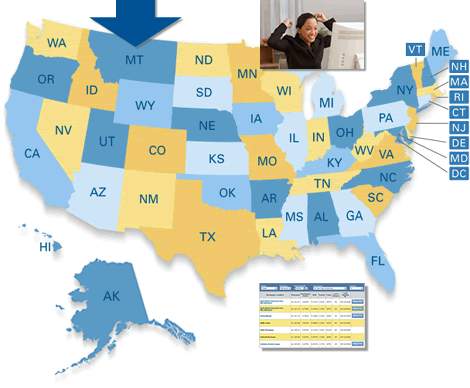
Start by selecting your state

Get the Updated and Improved Mortgage Rates App from ERATE.com

- Why housing consumers say you need a real estate agent
- Lenders Double Down on Car-Title Loans Attempting to Stay Ahead of Regulators
- Need Cash Fast? Beware of Greedy Lenders Waiting to Exploit You
- Mortgage Rates and the Stock Market: Understanding the Relationship
- The ERATE® Resource Guide to No-Closing-Cost Refinancing
- You and Your Credit; Make it a Happy Ongoing Relationship
- Principal Reduction: New Programs, More Controversy
- Understanding Mortgages: Mortgage Paperwork
- What is Mortgage Interest?
- Mortgage Terms & Definitions
- Understanding Mortgages: Types of Mortgages
- Understanding Mortgages: How to Get a Mortgage
- What is a Short Sale?
- Understanding Mortgages: Buy or Rent?
- Understanding Mortgages: Working with a Real Estate Agent
- Understanding Mortgages: Working with a Real Estate Agent
- Understanding Credit Cards: Top Mistakes
FREE Mortgage Rate Widgets
Your State's Rates or National Rates Get this Widget for any State you want