Chase Embarks on a Digital Advertising Journey with Innovative Media Business Launch
New York, NY – In a groundbreaking move within the financial services arena, JPMorgan Chase & Co. has unveiled a pivotal transformation with the launch of its very own media business this Wednesday. This initiative positions Chase as a forward-thinking titan in the industry, leveraging its expansive digital footprint to offer targeted advertising solutions.
The move signifies Chase's strategic pivot towards a more diversified portfolio, tapping into the lucrative advertising market. By crafting a platform that allows advertisers to precision-target the bank's 80 million customers, Chase is not only expanding its revenue streams but also enhancing the value proposition for its customers. This endeavor underscores a broader trend in financial services, as institutions seek to innovate and explore synergies between finance and technology to stay competitive in a rapidly evolving digital landscape.
Understanding Chase's New Media Business
Chase's recent announcement has set a new precedent in the intersection of financial services and digital marketing. The new media business launched by Chase represents a forward-thinking approach to advertising, leveraging its significant presence and data to offer an unparalleled service to advertisers.
Description of the platform and the services it offers
The platform provides a comprehensive suite of advertising solutions that leverage Chase's extensive customer data. By utilizing this information, advertisers have the opportunity to create highly targeted campaigns that are specifically tailored to the preferences and behaviors of prospective customers.
- Data-driven insights for audience targeting
- Customized ad experiences across multiple channels
- Integrated marketing campaigns within Chase's ecosystem
The benefit offered to businesses advertising through this platform
Advertising with Chase's new media business allows for an unprecedented level of precision in marketing efforts. Businesses can expect:
- Enhanced Engagement: More relevant ads lead to higher engagement rates.
- Increased Efficiency: Better targeting reduces ad spend waste.
- Improved ROI: The potential for a higher return on investment due to more effective campaigns.
Implications for Chase as a major player in the bank sector
As a major financial institution, Chase's venture into the media business is significant. It not only diversifies their portfolio but also positions Chase as an innovative leader in the banking sector. This move can:
- Strengthen Customer Relationships: By providing more relevant services and experiences.
- Open New Revenue Streams: Through the monetization of their proprietary data and platform.
- Set Industry Precedents: Leading the charge in combining financial services with targeted digital advertising.
The Intersection of Financial Services and Digital Advertising
The world of finance has never been static, and its evolution can be traced back through the various ways banks have interacted with advertising over the years. Long gone are the days when financial services companies relied solely on traditional media platforms like print, television, and radio to reach their audience.
Historical Context of Banks and Advertising
Traditionally, banks have approached advertising through broad-spectrum campaigns, employing mass marketing techniques to build brand awareness and trust. The primary aim was to reach a wide audience with general messages about reliability, security, and a range of banking services.
Embracing the Digital Shift
With the advent of the digital age, there has been a paradigm shift in how financial institutions perceive and harness the power of advertising. The proliferation of internet usage and digital platforms has prompted banks to migrate their advertising efforts to the digital realm. This change is driven by the need to reach the tech-savvy consumer and the desire for data-driven marketing strategies that yield higher ROI.
Combining Finance and Digital Advertising
Chase's seismic shift into establishing its own media business is reflective of a broader trend wherein financial services are not just participating in digital advertising, but are actively shaping its future. By leveraging their rich troves of consumer spending data, financial institutions are at an advantageous position to offer highly targeted marketing opportunities to advertisers.
- Curation of personalized advertising experiences
- Enhancement of customer value proposition through relevance and timing
- Formation of an ecosystem where finance and ad-tech coalesce
This convergence indicates a future where financial services and digital advertising are increasingly interlinked, opening up innovative channels for customer engagement and new revenue streams for banks like Chase.
Targeted Marketing and its Rise in Financial Institutions
Targeted marketing, a strategy that has revolutionized advertising in numerous industries, is now making a significant impact in the financial sector. By leveraging consumer data, banks and financial institutions like Chase are able to deliver personalized marketing messages to their customers. This level of specificity not only increases the efficacy of advertisements but also enhances customer engagement and satisfaction.
The Relevance of Targeted Marketing for Financial Entities
In today’s data-driven landscape, the ability to capture and analyze customer information is invaluable. Financial entities use targeted marketing to promote products and services that resonate with individual consumer needs and preferences, an approach that has proven successful in boosting both conversion rates and customer loyalty.
How Chase Plans to Leverage Customer Data for Targeted Advertising
Chase has announced its intentions to harness the vast amounts of customer data it collects to create a novel media business. The aim is to employ this data to empower advertisers with the capability to craft highly-targeted campaigns. By doing so, Chase is set to offer an innovative service that stands out in the crowded digital advertising marketplace.
- Analyzing spending patterns to offer personalized financial solutions.
- Enhancing customer experiences through bespoke marketing initiatives.
- Partnering with brands that align with customer interests and financial goals.
This targeted approach to marketing is a testament to Chase's understanding of the modern consumer's desire for relevancy in advertising. As financial institutions like Chase navigate the intersection of finance and digital marketing, the potential for growth is immense, paving the way for advancements in consumer outreach and service personalization.
The Role of Consumer Spending Data in Targeted Advertising
The evolution of targeted advertising has seen a significant shift with the integration of consumer spending data into marketing strategies. This data-driven approach allows for a granular understanding of consumer behavior, which in turn helps advertisers create more relevant and effective campaigns.
Utilization of Consumer Spending Data for Marketing
Consumer spending data is a goldmine of insights for marketers seeking to tailor their advertising efforts. By analyzing transaction histories, purchase behaviors, and overall spending patterns, marketers can identify consumer preferences and tendencies. This information then informs targeted campaigns, ensuring that advertisements are relevant to the consumers' interests and needs, which can greatly enhance the response rates and return on investment.
Types of Consumer Behaviors for Targeted Ads
Several consumer behaviors can be analyzed to fine-tune ad targeting, including:
- Frequent Transactions: Identifying where consumers shop regularly can signal brand loyalty and potential cross-sell opportunities.
- High-Value Purchases: Understanding when and where consumers make significant investments can help tailor upscale product offers.
- Seasonal Spending: Recognizing patterns related to seasonal or event-driven spending can inform timely advertising campaigns.
Chase’s Customer Data in Targeted Advertising
As a financial institution with a wealth of customer transaction data, Chase is uniquely positioned to leverage such information for its new media business. This proprietary data allows for an unprecedented level of precision in targeting ads based on actual spending, rather than solely relying on demographic or browsing data. By utilizing their own customer data, Chase can offer advertisers the ability to reach the right audience at the right time with the right message.
Ad Technologies and Platforms: Behind Chase's Strategy
Chase’s entry into the advertising domain is underpinned by a sophisticated suite of ad technologies and platforms tailored for precision and efficiency. At the core of this strategic move is a tech infrastructure designed to empower advertisers with unprecedented targeting capabilities. Leveraging the vast amount of consumer spending data at their disposal, Chase's technology offers an innovative approach to the existing landscape of digital advertising.
Tech Infrastructure Powering Chase's Advertising Capabilities
The foundation of Chase's advertising machinery is built on a robust and scalable technological infrastructure. This system provides a seamless integration of customer financial data with marketing tools, enabling a more curated and relevant ad experience. The aim is to connect with consumers more meaningfully by understanding their spending behaviors and preferences.
Comparison with Existing Ad Technologies and Platforms
When compared to existing ad technologies, Chase's platform is unique in its direct access to consumer transactional data. Unlike traditional ad networks that rely on third-party cookies and browsing history, Chase can leverage actual purchase data to inform ad targeting decisions. This direct approach not only enhances the precision of ad campaigns but can also improve the overall return on investment for advertisers.
- Real-time Data: Advertisers benefit from up-to-the-minute insights, ensuring that marketing efforts are aligned with current consumer trends.
- Reduced Reliance on Cookies: By using transactional data, Chase’s methods are likely to be less affected by the industry's shift away from cookie-based tracking.
- Increased Relevancy: Customers will see ads that are more relevant to their financial behavior, increasing the likelihood of engagement.
Chase's strategic application of their in-house data for targeted advertising could set a new precedent in the world of financial digital marketing, creating a strong case for the convergence of finance and ad tech.
The Importance of Customer Data and Privacy
In the realm of digital advertising, customer data drives precision in targeting but also stirs significant considerations around privacy. Chase's launch of its new media business raises vital questions about the delicate balance essential between leveraging data for tailored advertisements and safeguarding the clients' privacy.
The Delicate Balance: Data Use and Individual Privacy
Targeted advertising has become a cornerstone of marketing effectiveness, utilizing extensive consumer information to reach audiences with relevant and compelling messages. However, with great power comes great responsibility; maintaining user trust requires a strong commitment to their privacy. As Chase steps into this domain, the institution underscores the critical importance of aligning data-driven marketing strategies with stringent privacy norms.
Chase's Proactive Data Privacy Measures
Understanding the sensitive nature of consumer financial data, Chase implements robust privacy measures. The bank ensures that the data employed in its advertising platform adheres to both ethical standards and regulatory requirements. By marrying innovation with responsibility, Chase seeks to set a precedent in protecting client information while offering personalized advertising experiences.
- Transparency: Transparent policies inform customers about the data being used and the purpose behind it.
- Control: Providing customers with options to control their data and choose the level of personalization they desire.
- Security: Implementing advanced security protocols to prevent unauthorized access to customer data.
- Compliance: Ensuring all practices are in compliance with global data protection regulations like the GDPR and CCPA.
Chase embraces the philosophy that with profound insights comes the onus of protecting the individuals to whom that data pertains. In their new media venture, the safeguarding of customer data and the upholding of privacy are as paramount as the capacity to deliver precisely targeted advertising.
Partnership Strategies: The Inclusion of Air Canada
Chase announced Wednesday it has launched a new media business that not only revolutionizes digital advertising within the financial sector but also fosters key partnerships. A prime example of this strategic alignment is the inclusion of Air Canada as a significant partner.
The Strategic Partnership Between Chase and Air Canada
The collaboration between Chase and Air Canada is more than a mere alliance; it's a synergistic partnership envisioned to enhance value for both entities and their customers. Through this partnership, customers can expect a more tailored experience, with offers and promotions that align closely with their travel preferences and spending habits.
What This Partnership Entails for Both Entities and the Customers
The agreement allows access to Chase’s rich trove of consumer spending data, enabling Air Canada to identify potential customers with high precision and engage them with personalized advertising. For Chase, this venture broadens the appeal of their platform to potential advertisers, showcasing their ability to facilitate targeted marketing strategies within a secure and data-compliant framework. Importantly, customers stand at the juncture of these benefits, receiving more relevant offers and potentially better pricing.
Examples of How This Could Influence Future Purchase Behavior
- Travelers may receive customized flight deals based on their past purchase history.
- Frequent flyers could be offered exclusive Air Canada promotions linked to their Chase credit card usage.
- Insights into consumer behavior might lead to bundled travel and banking product offerings, creating a seamless financial and travel planning experience.
This partnership is a testament to Chase’s commitment to delivering innovation in the financial sector, harnessing the power of data to benefit customers, and paving the way for future strategic collaborations.
Banking Sector Innovations with Chase's Platform
Chase's latest foray into launching a new media business represents a significant advancement within the banking sector, signalling potential transformative effects on future marketing and branding strategies. The introduction of this advertising platform may not only enhance customer experiences but also set a benchmark for technology-driven, personalized marketing in the finance industry.
How Chase's Move May Influence Future Banking Sector Innovations
The strategic decision by Chase to intertwine financial services with targeted digital advertising is a trendsetting move. Banks are always seeking innovative approaches to not just attract customers, but also to retain them and increase their lifetime value. By controlling and utilizing owned media channels, Chase is positioning itself as a leader in the convergence of financial services and advertising technology, paving the way for others in the sector to follow suit.
Analysis of Current Trends in Banking Sector Innovations in Marketing
Marketing within the banking industry has been evolving rapidly, with personalized offerings and data-driven strategies becoming increasingly prevalent. Chase's platform is a continuation of these trends, harnessing the rich consumer spending data at its disposal. This move exemplifies how banks can leverage insights garnered from customer transactions and behaviors to provide more targeted and relevant advertisements.
- Integration of Consumer Data: The utilization of real-time data analysis to inform marketing efforts is expected to become more sophisticated, with confidentiality and consent remaining at the core.
- Customer-Centric Approach: Financial institutions are looking to optimize the customer journey by providing personalized content that resonates with individual needs and preferences.
- Multi-Channel Strategies: Banks are likely to increase their investment in various channels of advertising, ensuring a consistent brand experience across all touchpoints.
- Artificial Intelligence and Machine Learning: As seen with Chase's initiative, cutting-edge AI and ML technologies are key to analyzing consumer behavior and delivering customized ads.
In embracing this innovative advertising platform, Chase not only creates new revenue streams but also demonstrates a commitment to leading-edge solutions that meet evolving consumer expectations and the industry's stringent regulatory requirements. This proactive approach sets the bar higher for the banking sector and establishes a new standard for driving marketing innovations that respect customer privacy and provide value.
Consumer Behavior Analysis in Personalization
Understanding the intricacies of consumer behavior is fundamental to the success of any personalized marketing effort. With Chase's announcement Wednesday of their new media business, the company takes a leap forward in deploying consumer behavior analysis to optimize their advertising strategies. This innovative approach not only enhances the relevance of marketing messages for individual customers but also significantly improves the impact of ad spends.
The Role of Consumer Behavior Analysis in Effective Personalization
By meticulously analyzing transactional data, online interactions, and spending habits, Chase is poised to create hyper-personalized user experiences. This depth of analysis enables Chase to anticipate customer needs and preferences, aligning offers and advertisements with their specific financial journeys. Key to this approach is a sophisticated understanding of patterns and the ability to forecast future behavior effectively.
How Chase Intends to Personalize Marketing for Its Customers
Chase's innovative media business is expected to leverage a vast array of customer insights, translating them into personalized marketing campaigns. Whether it's tailored offers, customized service recommendations, or timely financial advice, the goal is to foster a more meaningful connection with their customers. By using predictive analytics and intelligent segmentation, Chase aims to deliver the right message to the right customer at the right time, thereby increasing engagement and loyalty.
- Engaging Customers with Personalized Financial Solutions: Chase can provide bespoke recommendations that resonate with individual financial goals.
- Behavior-Based Marketing Tactics: Using purchase history and behavioral data, Chase can effectively identify opportunities for cross-selling and up-selling relevant products.
- Dynamic Content Delivery: Real-time behavior analysis will enable rapid and dynamic content adjustments to suit changing customer preferences or circumstances.
In summary, Chase's entry into personalized marketing through data-driven consumer behavior analysis demonstrates a commitment to improving customer relationships and optimizing marketing ROI. As this new media business unfolds, Chase customers can anticipate a more tailored banking and financial services experience.
Regulatory Compliance for Advertisement in the Financial Sector
As Chase embraces an innovative approach by integrating advertising with financial services, maintaining adherence to the stringent regulations governing the sector is paramount. The regulatory landscape for financial service advertisements is both complex and dynamic, requiring constant vigilance and up-to-date knowledge to ensure that all communications are compliant.
Overview of the Regulatory Landscape for Financial Service Advertisements
The financial industry is subject to a myriad of regulations aimed at protecting consumers and ensuring fair practice. Regulatory bodies such as the Securities and Exchange Commission (SEC), Financial Industry Regulatory Authority (FINRA), and the Consumer Financial Protection Bureau (CFPB) set guidelines that dictate how financial services can be marketed to the public. These rules address the accuracy of information, prevention of misleading claims, transparency of terms, and the privacy of consumer data among others.
How Chase Ensures Compliance While Launching Its Media Business
With the rollout of its new media business, Chase has demonstrated a keen emphasis on meeting regulatory standards. The following measures are part of Chase's commitment to compliance:
- Regular Audits and Updates: Chase conducts periodic revisions of its marketing materials and strategies to align with current regulations.
- Training and Education: Employees and partners involved in the advertising sphere receive thorough training on the legal requirements specific to financial advertisements.
- Dedicated Compliance Teams: Chase has invested in specialized teams focused exclusively on navigating the complex regulatory ecosystem and ensuring that all campaigns are up to code.
- Data Privacy Safeguards: Adhering to laws like the General Data Protection Regulation (GDPR) and local mandates, Chase strictly protects consumer data and ensures transparent data usage in its advertising efforts.
By meticulously incorporating these standards into its operations, Chase ensures that its groundbreaking media business model not only drives marketing innovation but also fortifies consumer trust and maintains the integrity of the financial sector.
Challenges and Opportunities for Chase and its Advertisers
The launch of Chase's new media business positions the financial giant at the cutting edge of marketing innovation, melding consumer financial data with targeted advertising capabilities. However, with great innovation comes a unique set of challenges and opportunities, not just for Chase but also for the advertisers that will use this platform to reach their desired audience.
Potential Challenges Facing Chase
- Privacy Concerns: With consumers increasingly aware of their digital footprints, there is a growing demand for privacy. Chase must navigate the delicate balance between utilizing consumer data for personalized advertising and maintaining rigorous privacy standards.
- Regulatory Compliance: The financial sector is heavily regulated, and any misstep in advertisement compliance can lead to significant penalties. As such, Chase's platform must be built to adhere to strict regulatory standards.
- Market Competition: Despite being a novel venture, Chase will confront competition from established digital advertising platforms, necessitating distinguishing features that appeal to advertisers.
- Technological Adaptation: The dynamics of digital advertising are ever-evolving, requiring frequent platform updates and feature enhancements to stay current and effective.
Opportunities for Advertisers Utilizing Chase's Platform
- Access to Rich Consumer Data: Chase's vast repository of consumer financial data could allow advertisers to craft highly targeted campaigns with improved conversion rates.
- Financial Ecosystem Integration: Advertisers on Chase's platform could benefit from an ecosystem that's already centered around financial decision-making, potentially leading to higher engagement.
- First-Mover Advantage: Early adopters of Chase's advertising platform may enjoy a competitive edge by tapping into new audience segments before they become saturated.
- Innovative Marketing Solutions: Chase's platform might introduce new advertising techniques and analytics tools tailored for financial services, allowing for more effective marketing strategies.
As Chase endeavors into this uncharted territory, both the bank and its advertising clients stand at the cusp of a transformative junction that could redefine the role of financial data in digital marketing. The success of this initiative will depend on how well Chase mitigates the challenges and leverages the unique opportunities presented by this convergence of financial services and targeted advertising.
The Future of Personalization in Marketing
As financial institutions increasingly harness big data and analytics, the personalization of marketing efforts is reaching new heights. Chase's recent initiative underscores the potential of targeted advertisements in not just driving sales, but also in crafting highly individualized customer experiences. This bespoke approach in communication is rapidly becoming the gold standard in the marketing realm, particularly within financial services.
Predictions for the Future of Personalization within Financial Services Marketing
Looking ahead, we can anticipate several trends in the personalization of financial services marketing. Sophisticated algorithms will enable marketers to predict customer needs with greater accuracy, paving the way for anticipatory service offerings. Integration of artificial intelligence could offer real-time, adaptive interactions, essentially transforming relationships between financial institutions and their clientele.
How Consumer Expectations Are Shaping Marketing Strategies
Consumer expectations are at the core of these evolutionary marketing strategies. In a world where customers seek relevance and value, personalized marketing responds with unparalleled precision. Clients are no longer passive recipients of generic advertisements; they are active participants in a dialogue with their financial service providers. As a result, companies like Chase are investing in platforms that enable this high level of engagement, positioning themselves as customer-centric in an increasingly competitive landscape.
- Customers expect predictive and responsive services that recognize their unique preferences.
- Personalized marketing strategies are being developed to deliver highly relevant content.
- The convergence of financial services with state-of-the-art ad technologies facilitates tailor-made financial solutions.
In essence, the future of marketing lies in the ability to merge innovate technology with in-depth insights into consumer behavior. Chase's new media business is not just a part of this future; it is actively shaping it.
Conclusion: A New Era of Personalized Advertising
As we recap the key points discussed, it's clear that Chase's foray into a new media business is a significant step in the evolution of digital marketing within the financial sector. This cutting-edge platform signifies a remarkable intersection of finance and targeted advertising, driven by the power of consumer spending data and advanced ad technologies.
With the introduction of this innovative strategy, Chase is setting the stage for enhanced targeted marketing capabilities that are slated to bring about a transformative impact on the industry and its customers. Their commitment to harnessing the potential of customer data while upholding strict standards of privacy and regulatory compliance sets a precedent for the industry.
The anticipated outcomes are multifold: advertisers, armed with richer insights and more direct pathways to consumers, can curate more relevant campaigns; meanwhile, customers can benefit from offerings and information that align closely with their financial habits and preferences. Moreover, by including strategic partnerships, such as with Air Canada, Chase underscores the potential for collaborative success in this space.
Amid these advancements, one must acknowledge the challenges and opportunities that lay ahead. How Chase and its advertisers navigate these waters will shape not only their own trajectories but also the broader landscape of personalized marketing in finance.
In the final analysis, this bold initiative by Chase is more than an entrepreneurial endeavor—it is a glimpse into the future of personalization in marketing where relevance, precision, and value converge for the ultimate consumer experience.
Fannie Mae & Jumbo Mortgage Rates
Just One Click! = Current Rate Chart
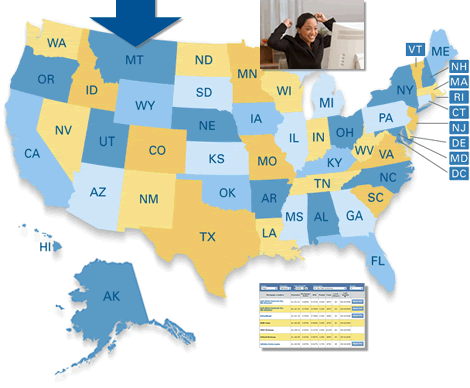
Start by selecting your state

Get the Updated and Improved Mortgage Rates App from ERATE.com

- Why housing consumers say you need a real estate agent
- Lenders Double Down on Car-Title Loans Attempting to Stay Ahead of Regulators
- Need Cash Fast? Beware of Greedy Lenders Waiting to Exploit You
- Mortgage Rates and the Stock Market: Understanding the Relationship
- The ERATE® Resource Guide to No-Closing-Cost Refinancing
- You and Your Credit; Make it a Happy Ongoing Relationship
- Principal Reduction: New Programs, More Controversy
- Understanding Mortgages: Mortgage Paperwork
- What is Mortgage Interest?
- Mortgage Terms & Definitions
- Understanding Mortgages: Types of Mortgages
- Understanding Mortgages: How to Get a Mortgage
- What is a Short Sale?
- Understanding Mortgages: Buy or Rent?
- Understanding Mortgages: Working with a Real Estate Agent
- Understanding Mortgages: Working with a Real Estate Agent
- Understanding Credit Cards: Top Mistakes
FREE Mortgage Rate Widgets
Your State's Rates or National Rates Get this Widget for any State you want