Reverse Mortgages
Refinance
Reverse Mortgages: Making Your Home Work for You
by Amy Lillard
Reverse mortgages are designed for an important transition in your life. When you bought your home, you had income. You needed equity and the joys that home living can bring. Now, your situation is reversed. You have equity, and want to maintain the joys of home living. You need income.
A reverse mortgage is a method for people like you to obtain money from your home. It's a loan against your home that requires no repayment as long as you live there. You as the homeowner receive a sum of money from a lender, usually a bank, based on several things, including the value of the house, the age of the borrower and current interest rates. Reverse mortgages are designed specifically for older homeowners to free up a source of income for any expenses necessary, including healthcare.
Refinance at Today's Low Rates!You qualify for a reverse mortgage if:
- You own your own home
- You and all other owners are at least 62 years of age
- You live in your home for more than half the year (it is your "principal residence")
- Your existing mortgage is paid off (or, you must use funds from the reverse mortgage to pay it off)
For specific types of reverse mortgages, such as the popular and federally-insured "Home Equity Conversion Mortgage" (HECM), other restrictions apply. For example, under this mortgage your home must be a single-family property, a 2-4 unit building, or a federally-approved condo or planned unit development (PUD). Another popular type of reverse mortgage, the "HomeKeeper" mortgage from Fannie Mae, specifies that you must own a single family home, PUD or condo.
Money obtained through reverse mortgages can be used for anything. You can supplement retirement income, repair or modify your home, pay for health care, buy a new car, cover property taxes, and more. You can choose to receive the money in the method most appropriate to you, including lump sum, monthly payments, or line of credit. This last option is by far the most popular with reverse mortgage recipients, and it allows borrowers to draw on the loan proceeds at any time. Your reverse mortgage loan must be repaid only when you cease to occupy your home.
Get Monthly Income with a Reverse Mortgage
Reverse mortgages should be considered carefully for several potential drawbacks:
- Fees can often be quite larger than expected. Many of the same costs that are expected at the time of purchasing a home loan apply, such as origination fees, insurance premiums, appraisal fees, and other closing costs. However, these fees are often more for reverse mortgages. These costs can be financed by the loan itself, but it does reduce the amount of money available to you.
- Reverse mortgage payments may affect your eligibility for government benefits.
- If your major objective is to provide an inheritance for your children, reverse mortgages do not help. Upon death, sale proceeds from your house will probably need to be paid to the lender, and not your chosen beneficiaries.
Thankfully, a provision exists that protects potential reverse mortgage borrowers. Counseling is required for all reverse mortgages so that you fully understand the program and the ramifications before applying. In addition, there are several helpful sites online to explain reverse mortgages in detail and direct you towards more information.
www.reverse.org
www.reversemortgage.org
www.aarp.org/money/revmort/
Highlights of Reverse Mortgages
The Qualifications for Reverse Mortgages:
- Age 62 or Older
- Own And Occupy The Home As A Primary Residence
- All Mortgages And Liens Against The Property Need To Be Paid Or Subordinated Prior To Closing (Can Be From Loan Funds)
- Attend An Information Session By An Approved Counseling Agency
The Advantages of Reverse Mortgages:
- Title To Home Remains In Borrower's Name
- Money Received Is Tax Free - It Is A Loan Against The Future Value Of The Home
- No Monthly Payments - We Pay You!!!
- No Restrictions On The Use Of Funds Available
- Loan Is Due When Borrowers No Longer Occupy The Prop
The Reasons for Reverse Mortgages:
- Payoff Current Mortgage On The Home
- Create Additional Monthly Income
- Set Up An Emergency Fund With A Line Of Credit
- Update Or Make Repairs To The Home
- Hire In-Home Health Care
- Purchase Long Term Care Insurance
- Travel, Buy A Car, Help Grandchildren In College, Etc.
Thinking about a reverse mortgage?
Other related articles:
Fannie Mae & Jumbo Mortgage Rates
Just One Click! = Current Rate Chart
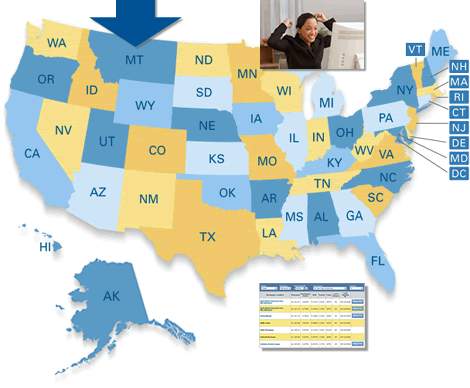
Start by selecting your state
Refinancing: Getting Started
- Refinance at Today's Low Rates!
- Guidelines to Mortgage Refinancing
- Why Refinance Mortgage?
- Would Refinancing Make Sense for you?
- Refinancing: 3 Common Types Refinancings
- Refinancing: Four Mistakes to Avoid
- Mortgage Refinancing Closing Costs Explained
- Potential Tax Benefits
- Mortgage Refinancing Calculator
- Loan Documentation - Mortgage Refinancing
- Refinancing FAQs
- Appraisal when Refinancing
- Refinancing - Non Owner vs Owner Occupied
- Home Owners Litigation - Refinancing
Refinancing: Selecting a Loan
- Mortgage Program Options
- Interest Only Mortgage
- 100% Mortgage Financing - No Down Payment
- No Costs Mortgage Refinancing
- 2% Rule - Refinancing Mortgage
- Yield Spread Premium
- Zero Costs Mortgage Refinancing
- Prepayment Penalty - Mortgage Refinancing
- What is APR and how is it calculated?
- Current Refinance Rates
- Private Mortgage Insurance - Refinancing
FREE Mortgage Rate Widgets
Your State's Rates or National Rates Get this Widget for any State you want