Money
Questions/Tips
An Emergency Reserve Account: Why You Need One
by Nancy Osborne, COO of ERATE®
Sep 10, 2007 - If you were hit with an unexpected financial emergency such as a job loss or a critical household repair, could you bear the financial burden of having to pay for it without going into debt? Would you be forced to sell long-term investments with potential tax consequences or even worse have to liquidate a retirement account and get stuck paying both taxes and penalties? If you are without a basic emergency reserve account (ERA) that has three to six months of your total monthly expenses in it, you may find yourself covering such simple necessities as food, shelter and clothing with credit or having to go through the process of liquidating investments and retirement accounts with damaging long term financial consequences. Covering life's essentials during a short term crisis could end up costing you severely in the long run when a little planning and some simple cost control could help you avoid the financial injury and give you some peace of mind.
Refinance at Today's Low Rates!The components of an ideal emergency reserve account are as follows:
- It covers 3 to 6 month's worth of your total expenses. If you are single with no dependents you can get by on the lower end of the scale and conversely the more people you have in your life who depend on your paycheck, the higher your monthly reserve amount should be.
- Another consideration to take into account when determining the reserve amount, is your chosen career and how readily employable you are. Are you working in an area where there is high demand in your field and you could be re-employed relatively quickly or would the loss of a job mean months, possible longer without income and the potential for relocation?
- Funds should be kept in a liquid account which can easily and quickly be converted to cash such as a money market account or CD.
- Keep the emergency reserve account separate from all other accounts thus minimizing the impact liquidating the account would have.
- Make a monthly contribution into your emergency reserve account just as you would make a monthly payment on a debt or a contribution into your retirement account.
- Your emergency reserve account is used for the sole and exclusive purpose of a real cash crunch or financial emergency and not to fund consumer purchases. Examples of legitimate purposes for tapping into the fund are as follows: job loss, making essential emergency repairs to an asset you own and need the use of (i.e. the heating or A/C systems in your home, a leaky roof or critical automotive repairs). The account is not meant to be used for cosmetic home improvements, to purchase a car or to buy any non-essential consumer goods.
 Nancy Osborne has had experience in the mortgage business for over 20 years and is a founder of both ERATE, where she is currently the COO and Progressive Capital Funding, where she served as President. She has held real estate licenses in several states and has received both the national Certified Mortgage Consultant and Certified Residential Mortgage Specialist designations. Ms. Osborne is also a primary contributing writer and content developer for ERATE.
"I am addicted to Bloomberg TV" says Nancy.
Releasing the Inner-Millionaire in You
Money Management Practices Worth Following
Money Management - Why Budget?
Money Management - Creating a Budget (Part 1)
Money Management - Creating a Budget (Part 2)
Money Management - Creating a Budget (Part 3)
How Much Money Will You Need to Retire?
What's Your Investment Personality?
Keeping Your Eye on the Big Picture
Do Yourself a Huge Favor: Save 10%
Fannie Mae & Jumbo Mortgage Rates
Just One Click! = Current Rate Chart
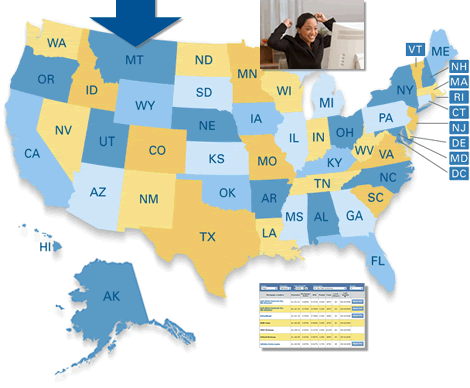
Start by selecting your state
Fannie Mae & Jumbo Mortgage Rates
Just One Click! = Current Rate Chart
Start by selecting your state
Refinancing: Getting Started

- Refinance at Today's Low Rates!
- Guidelines to Mortgage Refinancing
- Why Refinance Mortgage?
- Would Refinancing Make Sense for you?
- Refinancing: 3 Common Types Refinancings
- Refinancing: Four Mistakes to Avoid
- Mortgage Refinancing Closing Costs Explained
- Potential Tax Benefits
- Mortgage Refinancing Calculator
- Loan Documentation - Mortgage Refinancing
- Refinancing FAQs
- Appraisal when Refinancing
- Refinancing - Non Owner vs Owner Occupied
- Home Owners Litigation - Refinancing
Refinancing: Selecting a Loan
- Mortgage Program Options
- Interest Only Mortgage
- 100% Mortgage Financing - No Down Payment
- No Costs Mortgage Refinancing
- 2% Rule - Refinancing Mortgage
- Yield Spread Premium
- Zero Costs Mortgage Refinancing
- Prepayment Penalty - Mortgage Refinancing
- What is APR and how is it calculated?
- Current Refinance Rates
- Private Mortgage Insurance - Refinancing
FREE Mortgage Rate Widgets
Your State's Rates or National Rates Get this Widget for any State you want