Subprime Mortgage Info for borrowers with bad credit
Bad Credit Mortgages
Credit Scoring - FICO Scores
Credit scoring is a method of evaluating the ability and probability of credit users paying off their debts. FICO scores are credit scores developed by Fair Isaac Corporation (FICO). Today FICO credit scoring is widely used and accepted by lenders as a reliable source of credit evaluation.
Refinance at Today's Low Rates!Creditors will use credit scoring to determine how much of a risk proposition you are in terms of paying off debts. In other words, creditors would like to know how likely are you to repay the money they seek to lend you. Higher your credit score, the less of a risky proposition you are for loan grants. Credit scoring is used in determining loan interest rate, the amount of your down payment and the types of mortgages available to you.
Credit scoring models are developed by analyzing statistics and picking out characteristics that are believed to relate to your creditworthiness. Credit score analyzes a borrower's credit history considering numerous factors such as:
- Payment history
- The length of your credit history
- The amount you owe versus the amount of credit available
- Types of credit used
There are three major credit reporting agencies: Experian, Trans Union and Equifax. Some lenders use one of these three scores, while other lenders may use the middle score to work out your loan application.
Fannie Mae & Jumbo Mortgage Rates
Just One Click! = Current Rate Chart
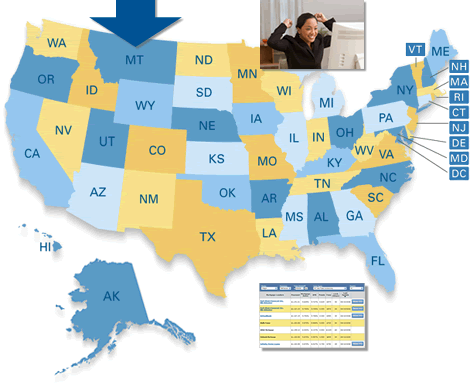
Start by selecting your state
What is a good FICO score?
FICO scores range between 300 and 850. Credit scoring is rated as follows:
~ Excellent: Over 750
~ Very Good: 720 or more
~ Acceptable: 660 to 720
~ Uncertain: 620 to 660
A low credit score may result in a denial of credit. Furthermore, lenders will charge higher interest rates on loans to individuals with lower scores. This practice is known as risk-based pricing.
If you are denied credit due to credit scoring, the Equal Credit Opportunity Act (ECOA) gives you the right to find out the reason for the denial within 30 days. You are also entitled to a free copy of your credit bureau report within 60 days, which you can request from the credit reporting agencies.
Your credit scoring report will contain up to four reasons. If the lender rejects your request for credit, these reasons can tell you why you were rejected and can help you determine how to improve your credit.
Ways to Improve Credit Scoring
While it is difficult to drastically increase your credit scoring over a short period of time, you should all you can to improve your credit scores. Here are some ways you can adopt.
- Always pay your bills on time
- Do not apply for credit very often
- Always try to reduce your credit card balance. Keep debt at the very minimum
- If you have limited credit, try to get more
While there is no doubt that a good credit scoring is important, it is necessary to point out that FICO scores do not take into account your age, income, assets or employment history. Moreover, FICO scores treat all late payments equally which does not reflect the true status of a person's credit-worthiness. Ultimately it all depends on the lender. There are lenders who besides taking into account the FICO credit scores, they also pay close attention to income, assets and employment history.


Bad Credit Related
- Bad Credit Mortgages
- No Closing Cost Loan
- Subprime Mortgage Info for borrowers with bad credit
- Credit Score Information for Subprime Mortgage
- Credit Grade and Acronyms for Subprime Mortgage
- Negotiating Collection Items found on Credit Report for Subprime Mortgage
- Collection Information for Subprime Mortgage
- FICO Score: Credit Scoring Basics
- You and Your Credit; Avoid Credit Scams!
- Simple Ways to Help Your Credit Score
- Are You in a Debt Crisis? Diagnosis & Solutions
- Secured Credit Card Shopping Tips
- Feds Clamp Down on Credit Card Abuses
- Debt: The Good, Bad and the Ugly
- Bankruptcy counseling helps cure debt addiction
- Get a CLUE about your home and auto insurance claims