Current Events in Financial Markets
FHA
FHA 30 Years Fixed Mortgage Rates
Just One Click! = Current Rate Chart
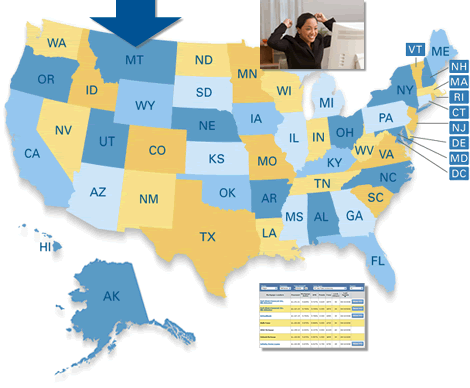
Start by selecting your state
FHA Changes Mean Better Option for Many Homeowners
by Amy Lillard
Aug 21, 2008 - The new Housing and Economic Recovery Act transforms the loan-issuing ability of the Federal Housing Administration (FHA), and it's come just in time for the mortgage market.
Applications for government-insured loans were up 133.9 percent in July from a year ago, while applications for conventional loans fell 50.2 percent, according to the Mortgage Bankers Association. Additionally, the level of conventional to FHA refinance applications was up 317 percent in July from a year ago. Analysts say this increased focus on cheaper, government-backed mortgages reflects the crippling effect of subprime ARMs and a plunging housing market, as well as the need for FHA to modernize.
With the Housing and Economic Recovery Act, the FHA is primed to do just that, accepting even more applications and helping more struggling homeowners. The Act is intended to curb home foreclosures and spark sales by offering first-time buyers a tax credit of up to $7,500 and extending protection to veterans facing foreclosure. But a major change represented by the bill is widening of qualifications for affordable and government-backed loans from the FHA. As many as 400,000 borrowers on the brink of foreclosure may be eligible.
Refinance at Today's Low Rates!The program works by allowing borrowers to refinance into FHA loans with steady, reasonable interest rates if current lenders approve the transition. The maximum loan will be $550,440. One caveat surrounds home value. If current home value is less than the mortgage, the current mortgage lender must agree to reduce the amount owed to 90 percent of its current appraised value. This situation applies to nearly one-third of American borrowers in the last five years.
Borrowers hoping to refinance into FHA loans will pay a fee of 3 percent of the loan amount at closing, either upfront or rolled into the mortgage. Additionally, an insurance premium of 1.5 percent a year will be included in the borrower's monthly payment. Finally, participating homeowners must also share half of any future property appreciation with the FHA.
While the program means more people qualify for FHA loans, some are automatically disqualified for refinancing. Those who obtained a mortgage after January 1, 2008 will not qualify, nor will those borrowers whose mortgage payment is less than 31 percent of their gross monthly income.
The program takes effect October 1 and expires September 30, 2011. Lawmakers hope that by extending the ability of the FHA to issue refinances and new mortgages, homeowners can escape from under the yoke of predatory subprime loans and avoid further economic pain, helping the country's housing market and greater economy in the process.
Refinance at Today's Low Rates!Web Articles:
http://www.bloomberg.com/apps/news?pid=newsarchive&sid=aLOj1Jjg5wbc
More Related Articles:
Refinancing Booms, But Can it Last?
Alt-A Mortgages Reset, Start Second Wave of Mortgage Fallout
FHA Loans Hidden Risk to Taxpayers
Central Banks Show Unprecedented Unity in Coordinated Rate Cuts
FHA 30 Years Fixed Mortgage Rates
Just One Click! = Current Rate Chart
Start by selecting your state


Bad Credit Related
- Bad Credit Mortgages
- No Closing Cost Loan
- Subprime Mortgage Info for borrowers with bad credit
- Credit Score Information for Subprime Mortgage
- Credit Grade and Acronyms for Subprime Mortgage
- Negotiating Collection Items found on Credit Report for Subprime Mortgage
- Collection Information for Subprime Mortgage
- FICO Score: Credit Scoring Basics
- You and Your Credit; Avoid Credit Scams!
- Simple Ways to Help Your Credit Score
- Are You in a Debt Crisis? Diagnosis & Solutions
- Secured Credit Card Shopping Tips
- Feds Clamp Down on Credit Card Abuses
- Debt: The Good, Bad and the Ugly
- Bankruptcy counseling helps cure debt addiction
- Get a CLUE about your home and auto insurance claims