Money
Questions/Tips
Money 101: Basics of Personal Finance
by Nancy Osborne, COO of ERATE®
In the end money is really nothing more than a commodity. It is used to measure the value of our efforts in the workplace (i.e. through our salary or wages) and is then transferred to acquire something of value that we need or want (i.e. shelter, food and clothing). Of course money in and of itself does not reflect wealth. You can spend everything you earn each month, regardless of your earnings, and have nothing left to show for yourself. Below are elements of personal finance which impact everyone:
· Income – how much do you earn, how much do you actually need or want to earn?
· Spending Habits – do your income and spending habits complement each other or are they out of balance? Do you have extra money at the end of each month or are you running into debt?
Refinance at Today's Low Rates!
· Ability to Plan– we all have the long term goals of home ownership, financing the education of any children we have along with our retirement. The sooner you begin planning and saving to meet these goals, the faster you will reach them and the less stress you will experience along the way.
· Unforeseen Circumstances – do you have surplus cash to cover emergency expenses (i.e. if your car breaks down or a household appliance is on the blink)?
· Your Money Personality – are you a saver, spender, do you fall somewhere in the middle? Just where does your money personality fit within the spectrum? And of equal importance, what is the money personality of your spouse or significant other? Two extreme savers might not have much fun together but they will likely retire comfortably, while two spenders could spell disaster.
How you respond to the aforementioned element translates into how you manage your money. The following are tools that are used in executing your money strategy:
· Budget – takes into consideration all your monthly expenses and income. You should set something aside each month to save and invest. Creating and sticking with a budget plan will help keep you on track and you’ll avoid making impulsive spending decisions.
· Investments – if you are living on a budget then you are saving money each month and the next step is to invest what you’ve set aside. Your investment decisions should be based on your age and level of risk tolerance. Make sure that whatever money you do invest is actually working for you and you’re not paying high commissions and fees to an investment advisor or brokerage.
· Use of Credit – credit is tool that when used properly, such as making an investment in an appreciating asset like real estate, can be your financial best friend. However when misused, such as racking up revolving debt and financing consumer purchases, it can become financially devastating.
· Managing Life’s Risks – if you don’t have sufficient assets to cover life’s unexpected emergencies then you need insurance to cover them and if you do have substantial assets then you’ll want to protect them. Either way everyone needs medical, disability, homeowner’s (or renter’s insurance) and life insurance, if you have dependents.
· Planning for Life’s Major Expenses – the sooner you start executing a plan for saving and working towards these goals, the better off you’ll be. As mentioned previously, homeownership, financing for higher education and retirement are the big three.
· Planning Your Estate – you’ve worked your whole life for what you’ve managed to accumulate, now make sure it all ends up where you intended. Don’t risk dying intestate (without a will) and allowing the state to sort out your personal financial matters. Good estate planning involves many tax considerations as well. Seek out expert advice in this area so you can make decisions in the best interests of yourself and your family.
Refinance at Today's Low Rates!
Now that we’ve defined the elements and tools of personal finance, sit down and evaluate how you think about, relate to and apply them. Be honest with yourself and look for areas which require improvement or that have been neglected altogether. If you are not motivated to make any necessary changes on your own then you may want to seek the help of a professional such as a certified financial planner, check out http://www.cfp.net/search/ .
 Nancy Osborne has had experience in the mortgage business for over 20 years and is a founder of both ERATE, where she is currently the COO and Progressive Capital Funding, where she served as President. She has held real estate licenses in several states and has received both the national Certified Mortgage Consultant and Certified Residential Mortgage Specialist designations. Ms. Osborne is also a primary contributing writer and content developer for ERATE.
"I am addicted to Bloomberg TV" says Nancy.
Money - A Personal Financial Check-Up
Money - Keeping Your Eyes on the Big Picture
Money Management Practices Worth Following
How Much Money Will You Need to Retire?
What's Your Investment Personality?
Want an iPad? Start Saving Now
Fannie Mae & Jumbo Mortgage Rates
Just One Click! = Current Rate Chart
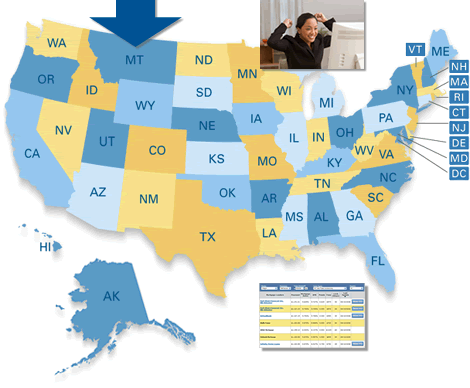
Start by selecting your state
Refinancing: Getting Started

- Refinance at Today's Low Rates!
- Guidelines to Mortgage Refinancing
- Why Refinance Mortgage?
- Would Refinancing Make Sense for you?
- Refinancing: 3 Common Types Refinancings
- Refinancing: Four Mistakes to Avoid
- Mortgage Refinancing Closing Costs Explained
- Potential Tax Benefits
- Mortgage Refinancing Calculator
- Loan Documentation - Mortgage Refinancing
- Refinancing FAQs
- Appraisal when Refinancing
- Refinancing - Non Owner vs Owner Occupied
- Home Owners Litigation - Refinancing
Refinancing: Selecting a Loan
- Mortgage Program Options
- Interest Only Mortgage
- 100% Mortgage Financing - No Down Payment
- No Costs Mortgage Refinancing
- 2% Rule - Refinancing Mortgage
- Yield Spread Premium
- Zero Costs Mortgage Refinancing
- Prepayment Penalty - Mortgage Refinancing
- What is APR and how is it calculated?
- Current Refinance Rates
- Private Mortgage Insurance - Refinancing
FREE Mortgage Rate Widgets
Your State's Rates or National Rates Get this Widget for any State you want