Economic News
Bernanke Gives Economic Outlook
by Nancy Osborne, COO of ERATE®
July 23, 2008 - Federal Reserve Chairman Ben Bernanke gave his semi-annual testimony before the House Financial Services Committee recently and it appears that he, along with a number of economists, hold out limited hope of a rebound of the U.S. economy in the second half of the year. The next meeting of the Fed's Federal Open Market Committee (or FOMC) is on August 5th in Washington where analysts expect the Fed Funds rate to stand pat at 2.00%, having fallen seven times since September of last year, as the Fed is now caught in a catch-22 situation of slower growth and rising prices.
Forecasts for future growth remain more uncertain than usual as the risk that gross domestic product (or GDP) will shrink has been rising at a time the rate of inflation continues spiking. Many economists anticipate an anemic growth rate of around 1% while others believe that the economy will actually contract rather than grow as a consequence of the decline in housing and its adverse impact on consumer spending which has been further aggravated by the spike in fuel prices as well as other inflationary pressures. The annual rate of economic growth for the economy in the first quarter came in at 1%, reflecting the weakest six month period in five years. The mounting financial crisis is curtailing the supply of credit and contributing to the slump in housing while an almost doubling of the price of oil this past year has forced consumer expectations of inflation higher. U.S. households now anticipate that the average rate of inflation over the next five years will reach 3.4%, marking the highest expectation level since 1995. The drop in home prices has contributed to the increasing rate of foreclosures, while both rising energy prices as well as more restrictive access to credit have all worked together to weaken the economy, moving it closer to recession. The inflationary pressures coming from fuel, food and a variety of other commodities are now thought to be exerting pressure on wages and prices. Tax rebates came at an opportune time for U.S. households and may have prevented even more lackluster consumer spending. Both consumer and business spending are anticipated to be even more anemic over the second half of the year as more reasons to exercise caution will persist.
 Nancy Osborne has had experience in the mortgage business for over 20 years and is a founder of both ERATE, where she is currently the COO and Progressive Capital Funding, where she served as President. She has held real estate licenses in several states and has received both the national Certified Mortgage Consultant and Certified Residential Mortgage Specialist designations. Ms. Osborne is also a primary contributing writer and content developer for ERATE.
"I am addicted to Bloomberg TV" says Nancy.
Other Articles:
Banks Must Raise $74.6 billion; Losses From Bad Loans Could Total $600 billion
Housing Slump Sparked by Mortgage Mess Thought to Last Longer
Tips on Developing a Recession-Proof Lifestyle
The ABCs of Collateralized Debt Obligations & Credit-Default Swaps
Fannie Mae & Jumbo Mortgage Rates
Just One Click! = Current Rate Chart
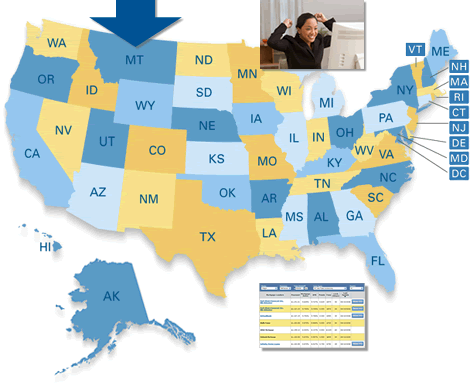
Start by selecting your state
- Recovery in Housing Unsustainable without Jobs
- Homebuyer tax credit boosts economy
- 2.2 million refinanced mortgages saving homes, economy
- Government Ponders What to Do Next About the Ailing Economy?
- Bernanke Gives Economic Outlook
- Economy and Housing Market Rebounds, But Will It Last?
- Fed Cuts Rate in Efforts to Ease Credit Crunch, Help Borrowers
- Economic Recovery: Reality or Illusion?
- Top consumer complaints tied to areas of economic distress